
Guinea-Bissau
- Population:
- 2,201,000
- Language:
- Portuguese
- Religion:
- Islam
Guinea-Bissau was a Portuguese colony until it gained independence in 1973 following a long liberation war. It has since faced political instability and economic struggles, with agriculture and fishing as key sectors of its economy.


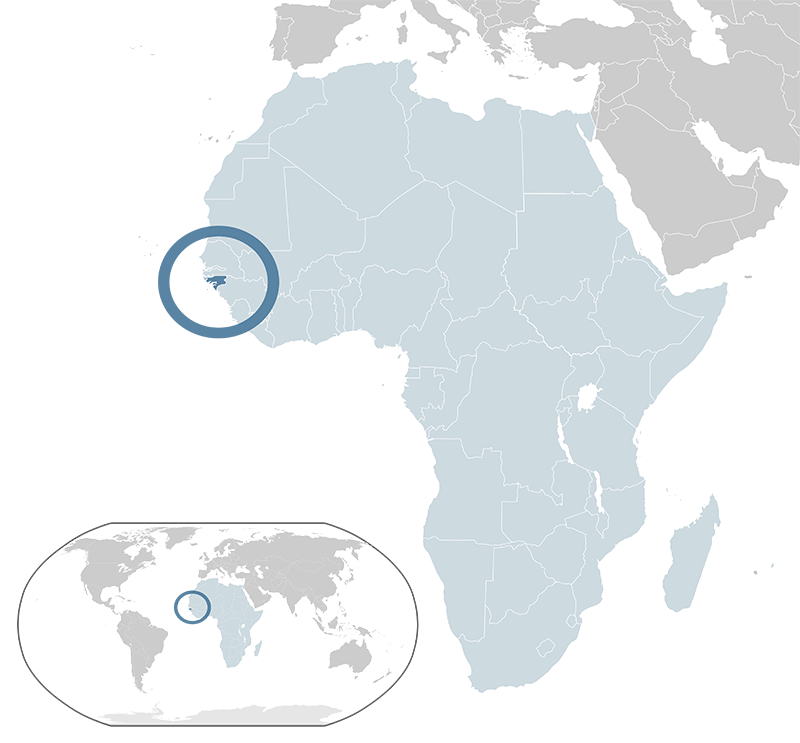
Guinea-Bissau, officially the Republic of Guinea-Bissau, is a country in West Africa. It is bordered by Senegal to the north, Guinea to the south and east, and the Atlantic Ocean to the west. Covering an area of approximately 36,125 square kilometers, it has a population of about 2 million people as of 2023. The capital and largest city is Bissau. The official language is Portuguese, with Crioulo and various African languages also spoken. Guinea-Bissau operates as a semi-presidential republic. The economy is primarily based on agriculture, with cashew nuts being the main export, along with fish and seafood. The country has experienced political instability since its independence from Portugal in 1973, with numerous coups and civil unrest. Despite its challenges, Guinea-Bissau is known for its rich biodiversity and the Bijagós Archipelago, a UNESCO Biosphere Reserve.
| Title | Population | Bibles | Resources |
|---|---|---|---|
| Balanta-Kentohe | 430100 | 2 | 26 |
| Pulaar | 347300 | 2 | 36 |
| Upper Guinea Crioulo | 269880 | 3 | 11 |
| Mandjak | 243100 | 1 | 13 |
| Mandinka | 182000 | 1 | 14 |
| Papel | 178400 | 1 | 4 |
| Biafada | 58600 | 1 | 1 |
| Mankanya | 57410 | 2 | 4 |
| Bidyogo | 38700 | 1 | 27 |
| Mansoanka | 19990 | 1 | 2 |
| Western Maninkakan | 19910 | 1 | 5 |
| Nalu | 11710 | 0 | 2 |
| Bainouk-Gunyuño | 11610 | 0 | 1 |
| Jahanka | 9950 | 0 | 1 |
| Wolof | 9890 | 4 | 23 |
| Ejamat | 7650 | 1 | 8 |
| Badyara | 5980 | 0 | 2 |
| Susu | 5740 | 4 | 16 |
| Portuguese | 5610 | 18 | 349 |
| Soninke | 5400 | 0 | 38 |
| Bayot | 5400 | 1 | 4 |
| Kabuverdianu | 2510 | 1 | 3 |
| Bambara | 2110 | 2 | 10 |
| Balanta-Ganja | 1990 | 0 | 3 |
| Pular | 1890 | 1 | 38 |
| North Levantine Arabic | 1540 | 2 | 21 |
| French | 1190 | 45 | 126 |
| Kobiana | 860 | 0 | 1 |
| Jola-Fonyi | 630 | 1 | 15 |
| Bassari | 550 | 1 | 2 |
| Serer | 0 | 2 | 10 |
| N'Ko | 0 | 0 | 0 |
| Eastern Maninkakan | 0 | 1 | 11 |
| Kasanga | 0 | 0 | 1 |